








More about: 5 Days in Rome
Rome promises adventure no matter how long you stay. However, five days is the perfect length of time for a trip to Rome: you can stroll leisurely through its streets, see all its sights and some secret corners, and take your time to really enjoy the city instead of rushing from one place to another.
It's easy to plan a five-day itinerary in Rome where every day is a must, but only if you know what to see each day. Taking the time to explore the Eternal City is something that is richly rewarded, and in the following lines I'll tell you why.
1. Day one: Rome's main monuments and a stroll through the Jewish quarter
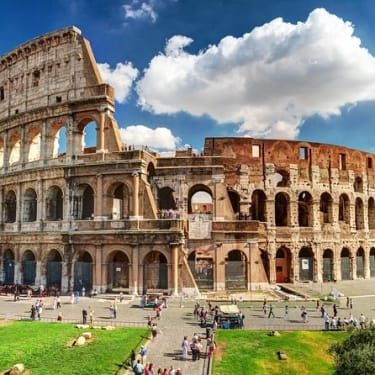
In my experience, starting a trip to Rome with the Colosseum and the Roman Forum is a spectacular way to get your first glimpse of the city's most impressive side, its monuments and imperial ruins.
Visit to the Colosseum

Regardless of how long you are staying in Rome, it is best to find out how to buy your tickets for the Colosseum in advance, which will save you from queuing at the ticket office. You will have to queue to get in, as this monument is extremely busy from opening to closing time. Therefore, it is best to go as early as possible.
Another option is to take a guided tour of the Colosseum, which means you don't have to queue to enter the monument and you get to hear the commentary of a guide specialising in ancient history.
Useful information
- How to get there: by underground to the Colosseo stop (underground line B). More information on How to get to the Colosseum in Rome
- Opening hours: from 8:30 a.m. to 7 p.m. Closed on 25 December and 1 January.
- Tickets: You can book them in advance to avoid queues at the ticket office.
Discover the Roman Forum
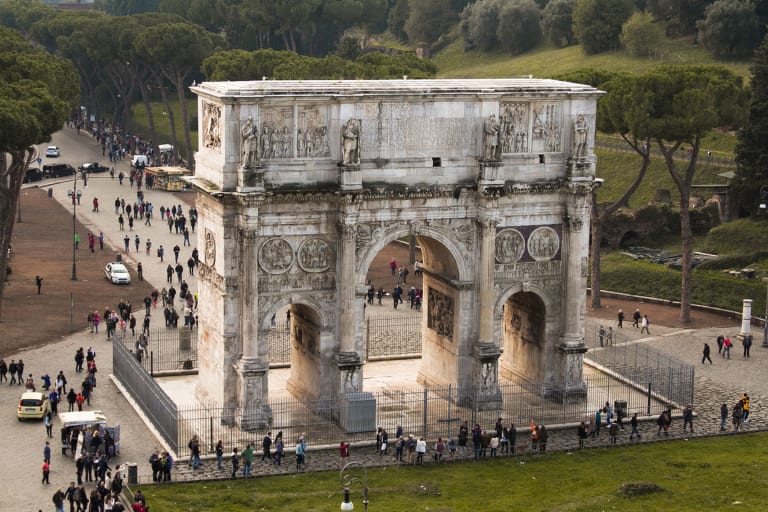
Next to the Colosseum is a huge archaeological site known as the Roman Forum. This was the centre of Ancient Rome, where the main buildings of political life were located, as well as temples and markets, and is a must-see. So don't hesitate and book a visit to the Forum.
The Roman Forum is at the top of Palatine Hill, and the main entrance is very close to the Colosseum. You can also enter via Via di San Gregorio. If you don't feel like walking or are in no hurry, simply go to the main entrance, where you can see the impressive Arch of Constantine, which is almost 1,700 years old.
Once inside the Roman Forum, keep your eyes peeled for the Arch of Titus, which was built to celebrate the conquest of Jerusalem, the Basilica of Maxentius, a public meeting place that you will recognise as the inspiration for other Renaissance buildings, and the temples of Antoninus and Faustina and Vesta.
Stop for lunch
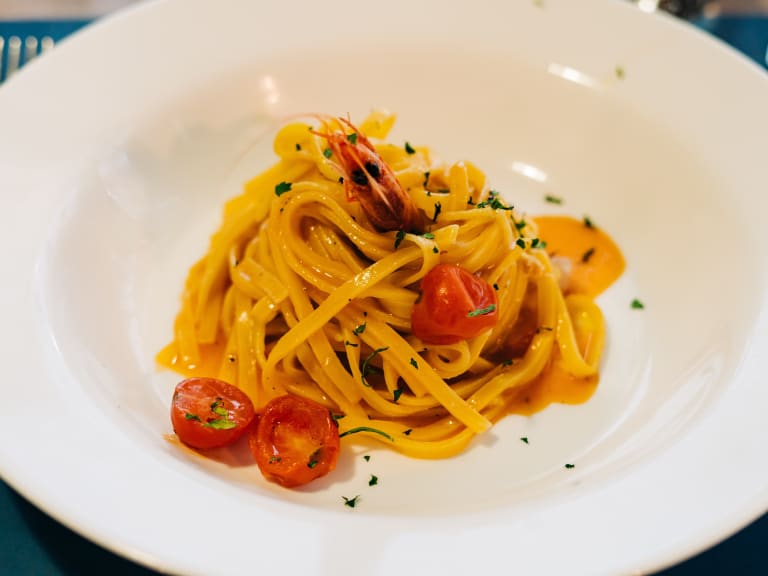
If you're feeling hungry, which can happen literally at every turn in Rome, I recommend booking a food tour of Rome where you can enjoy Italy's finest culinary delights.
Another option is to head to Taverna dei Quaranta, whose cosy atmosphere makes it a great place to enjoy a good meal and relax. With its vaulted ceilings and checkered tablecloths, the slightly retro style of this place goes hand in hand with exquisite traditional food. It is located at Via Claudia, 24.
Explore Piazza Venezia and the Campidoglio
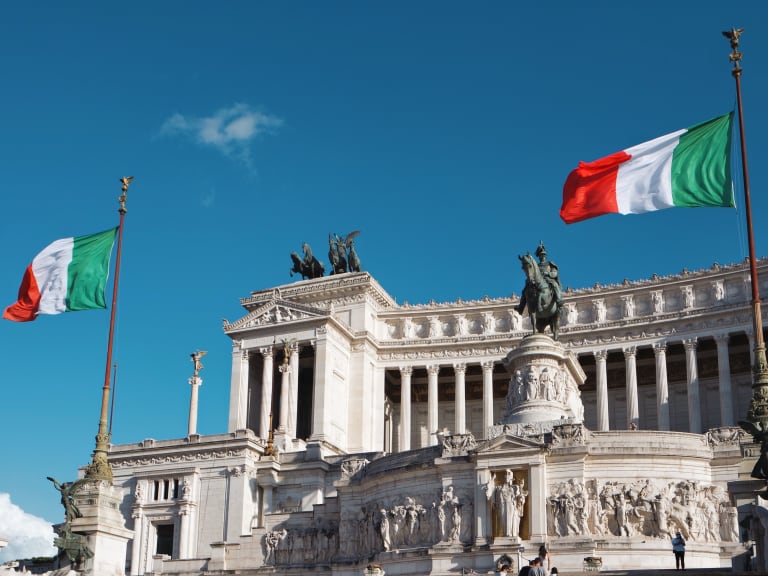
In the early afternoon, I recommend booking a tour of Rome's fountains and squares, where you'll discover the most beautiful corners of Rome.
You can also visit Piazza Venezia, dominated by the monument to Victor Emmanuel II (also known as the Altar of the Fatherland). There you can climb up to what is known as the Terrace of the Quadrigas, or popularly 'Roma dal Cielo', and enjoy beautiful views of the square itself, the Roman Forum and the Colosseum. The entrance fee is €7 for adults and €3.50 for children and teenagers between the ages of 10 and 18, so this is a totally optional experience, although highly recommended.
Afterwards, I recommend climbing the Campidoglio hill and sitting in the square of the same name. Its oval shape, the statue of the emperor and philosopher Marcus Aurelius in the centre, and the beautiful buildings surrounding it make it, in my opinion, one of the most beautiful squares in Rome, so take your time to enjoy it. From its viewpoint, there are also beautiful views of the Roman Forum.
Explore the Jewish Quarter

After marvelling at the greatest monuments of Ancient Rome, delve into a very different side of the city: Rome's Jewish quarter or ghetto.
If you book a tour of the Jewish Quarter, you will get to know it and see that it is a very peaceful place where the ideal thing to do is to lose yourself in its narrow streets: located next to the Tiber, peace reigns in its corners and, as if by magic, you will forget that you are actually very close to the crowded Colosseum.
On your walk through the Jewish quarter, visit the Great Synagogue of Rome (which you can only visit inside on an official tour), stop by the Portico of Octavia, which in ancient times housed a library and several temples, and sit in Piazza Mattei to enjoy the sound of water from the charming Turtle Fountain.
Discover Piazza della Bocca della Verità
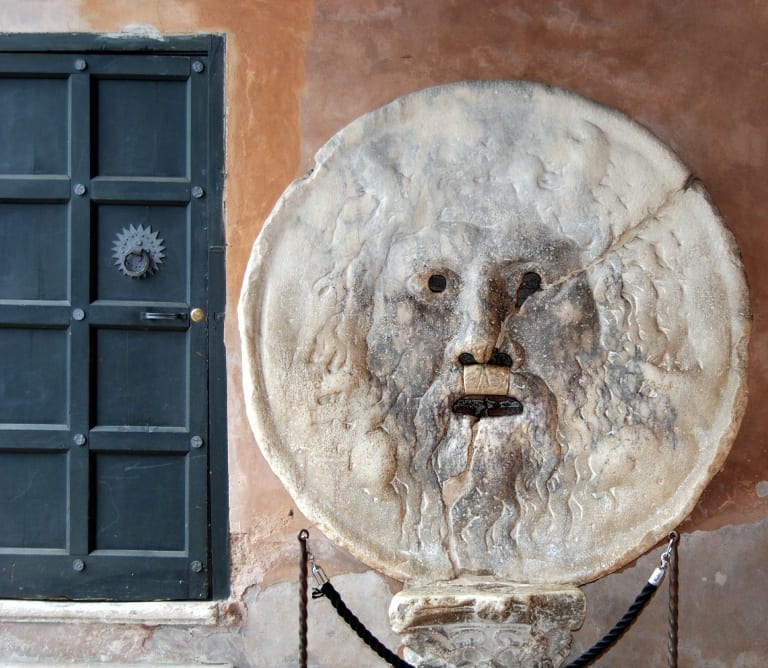
The square of the Bocca della Verita, a short walk from the Jewish quarter, is home to one of Rome's most popular curiosities, inside the portico of the beautiful medieval church of Santa Maria in Cosmedin. It is, of course, the Bocca della Verità, a marble sculpture depicting the face of a man with his mouth open.
If you've seen Audrey Hepburn's Roman Holiday, you'll remember the scene where she puts her hand in it. According to legend, the Bocca della Verità can recognise liars and will bite off the hand of anyone who puts it in its mouth. In the same square, you can also see other minor points of interest, such as the Temple of Hercules, the Temple of Portunus and the Arch of Janus. This will be one of the places you visit on the tour of Rome's fountains and squares.
Afterwards, you can take a stroll and return to the Jewish quarter for dinner and a drink. I recommend trying the famous Jewish-style artichoke dish served in most restaurants in the area, although if you want a recommendation, go to Giggetto al Portico d'Ottavia, at Via del Portico D'Ottavia 21/a-22, where they serve this traditional recipe as well as delicious pasta.
Day 2: Stroll through Piazza Navona, the Pantheon and the streets of central Rome
On the second day, you will continue exploring the city centre and other important monuments. I recommend taking a guided tour so that you can learn about the historical details of the city's most emblematic places. Here are some of them:
Be dazzled by the Pantheon
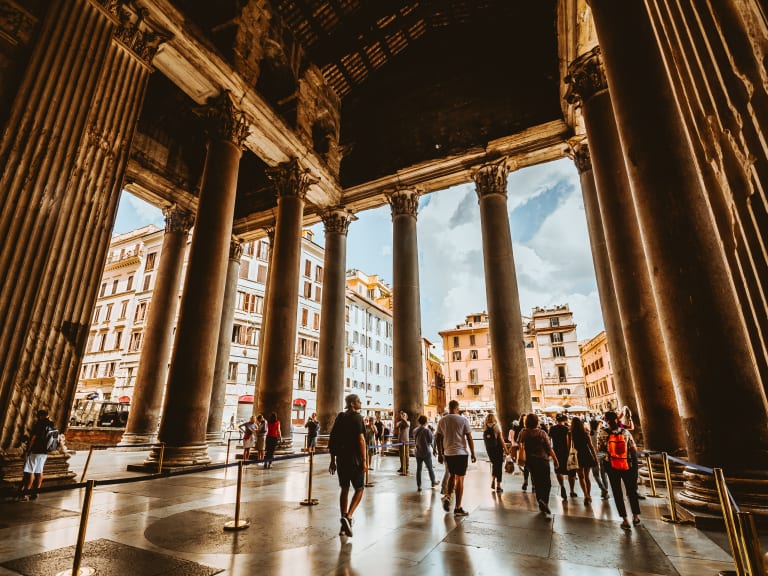
Piazza della Rotonda is home to one of the most interesting and beautiful places in the entire city: the Pantheon of Agrippa, also known as the Church of Santa Maria Rotonda. In the 7th century, what had been built as a temple dedicated to the Roman gods was converted into a Catholic church, and thus the best-preserved building of Ancient Rome has survived to this day.
The Pantheon is an architectural marvel, and inside you will feel as if you have been transported to another world. Your first instinct upon entering is to look up and marvel at the dome and the round opening at the top, an oculus that allows sunlight to enter and creates a magical atmosphere that fills the entire space. The opulence of the Pantheon's walls includes monumental tombs of Italian kings and the artist Raphael, as well as intricate mosaics and sculptures that shine with a special light.
If you want to learn all about its hidden history, book a guided tour of the Pantheon. When you leave, I recommend taking a walk around the outside of the building to really understand how incredible the structure of this temple is.
Stroll through Rome's most beautiful squares
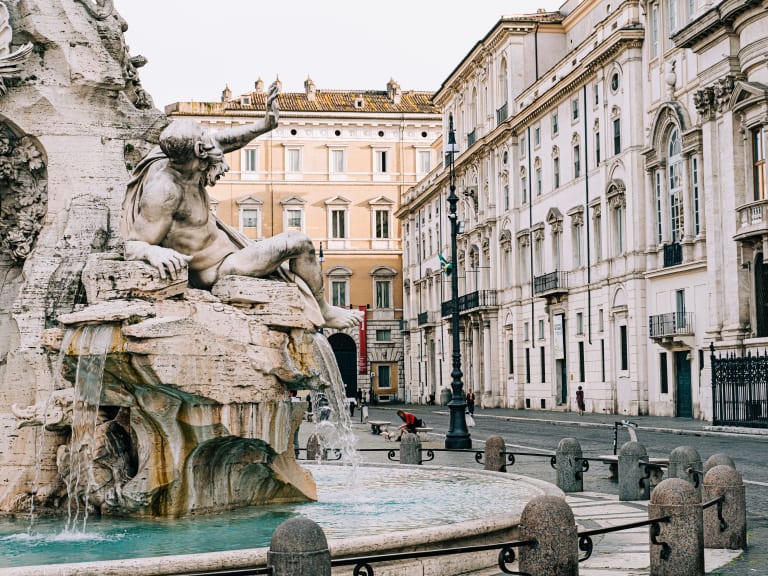
After visiting the Pantheon, take a stroll around the surrounding squares. The most beautiful are Piazza di Petra, which has some very beautiful ruins and a lively atmosphere, Piazza della Minerva and Piazza Sant'Eustachio, famous among other things for Sant'Eustachio Il Caffè, a café that serves one of the best espressos in Rome.
Piazza Navona is one of the most famous squares in all of Italy, and it's no wonder: whether it's for its three impressive fountains, the most beautiful of which is the Fontana dei Quattro Fiumi with its enormous obelisk, or for the Baroque church of Sant'Agnese in Agone, which provides a beautiful backdrop to a stroll through the square. It is also another of the squares you will visit if you book the tour of Rome's fountains and squares. Scattered around the square you will find restaurants, bars, cafés and street artists.
The oval shape of the square is due to the fact that in ancient times it was the site of the Stadium of Domitian, a prominent place in public life in imperial Rome where festivals and sporting events were held. A stroll through Piazza Navona is a classic part of any itinerary in the Eternal City, allowing you to enjoy the beauty of its architecture while soaking up the atmosphere of Rome.
Stop for lunch
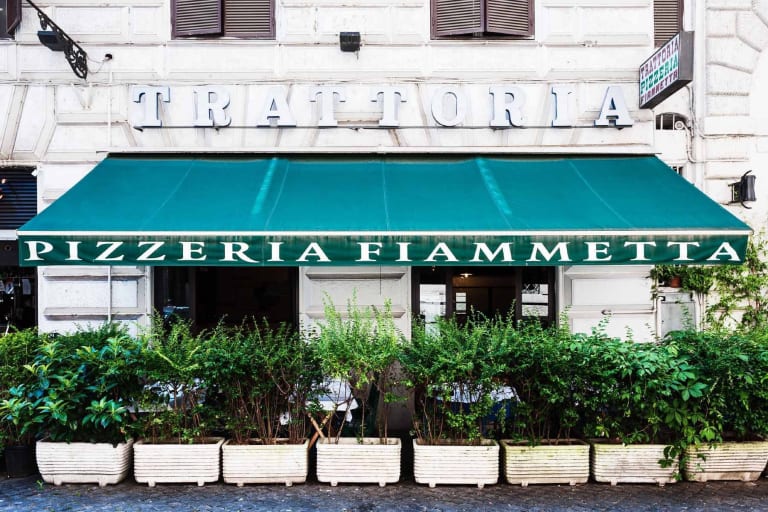
Near Piazza Navona, at Piazza Fiammetta, 10, is Ristorante Fiammetta, a trattoria tucked away on a street lined with antique shops. It makes perfect sense, as this restaurant maintains all the quality, flavour and craftsmanship of traditional Roman cuisine.
You can eat either inside or outside on a very cosy terrace, and the prices are reasonable, at around €20-25 per person. Highly recommended.
Explore Campo de' Fiori

After lunch and coffee, return to Piazza Navona and walk south along Via della Cuccagna towards Palazzo Braschi, an ancient palace that is now known as the Museum of Rome. Continue to Corso Vittorio Emanuele and cross the street until you reach Via dei Baullari, at the end of which is Campo de' Fiori square.
During the day it is a bustling market and at night it becomes an area where you can go out for a drink or enjoy a gastronomic tour of Campo de' Fiori. In the market, you can find all kinds of food and even flower stalls, as it is actually quite tourist-oriented, but you can still find some typical quality gastronomic products.
Public executions used to take place in Campo de' Fiori square, which is why there is a statue of the astronomer Giordano Bruno, condemned for his cosmological studies, in the centre of the square.
Visit the Trastevere neighbourhood

From Campo de' Fiori, you are a short walk from the last stop of the day: Trastevere. Head to the southeast corner of the square, just opposite where you entered (I recommend using the statue of Giordano Bruno as a reference point). Walk along Via dei Giubbanari to the narrow alleyway of Via dell'Arco del Monte. If you look down here, you can see Ponte Sisto in the distance. Continue along Via dell'Arco del Monte and cross the bridge to the other side of the Tiber.
Turn left and continue along Via del Moro to the end of the street, and on your right you will find Piazza di Santa Maria in Trastevere, the main square of this famous neighbourhood. Here you will find one of Rome's most interesting tourist attractions, the iconic Basilica of Santa Maria in Trastevere, which is definitely worth a visit to marvel at the impressive mosaics inside.
Trastevere is a wonderful neighbourhood to stroll around and enjoy the afternoon, whether in the surroundings of the Isola Tiberina or on the terrace of a bar. It has some of the most charming restaurants in Rome, and you can also get to know it in detail by booking a tour of Trastevere
Relax on the Gianicolo Terrace
After exploring Trastevere, and if you still have time to see the sunset, I recommend climbing up to the Gianicolo and enjoying the sunset over Rome. The Fontana dell'Acqua Paola, in front of which is the most popular viewpoint, is the place to head for, about a 15-minute walk from Piazza di Santa Maria in Trastevere.
If, on the other hand, you're running late or don't want to walk any further, I recommend relaxing with a Peroni and a pizza on the terrace of the Ai Marmi pizzeria, at Viale di Trastevere, 53-59. Although the atmosphere there is anything but quiet, you'll try one of the most delicious pizzas in all of Rome, well deserved after a day of walking.
Day three: The grandeur of the Vatican and the Borghese Gallery
The third day begins with a visit to the Vatican and St. Peter's Basilica. There are guided tours that include admission to both and, of course, the dome, from where you can enjoy the best views of the Roman city. You'll end this day of art by contemplating the marvellous works of art housed in the Borghese Gallery and strolling through its gardens.
Don't miss the Vatican Museums

Many people buy tickets for the Vatican Museums and the Sistine Chapel without queuing as soon as they land in Rome, and it's no wonder. In this tiny country you will find two of the most important places in the Western world, both for art history and for Catholic worship:
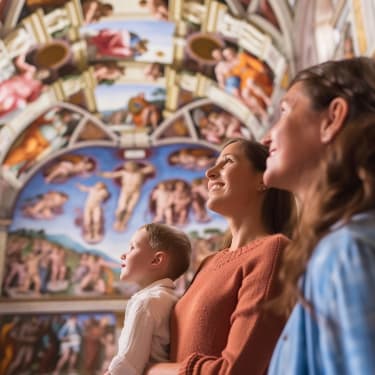
One of them is the Vatican Museums, a lavish museum where, in addition to the impressive Hall of Maps and the Vatican Pinacoteca, which displays works by Raphael, Caravaggio and Da Vinci, you can see the famous Sistine Chapel and be amazed by Michelangelo's frescoes of The Last Judgement.
Here are some tips and interesting facts for your visit:
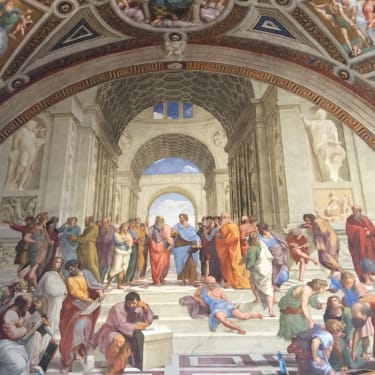
- I recommend spending a good amount of time discovering everything this place has to offer. In addition to the rooms already mentioned, visit the Chiaramonti Gallery, full of Roman sculptures, see the 'Apollo Belvedere' and the breathtaking 'Laocoon and his sons' in the Pio Clementino Museum, Raphael's Rooms, a series of rooms decorated by the artist himself, and the Chapel of Nicholas V, one of the jewels of the Vatican Museums that goes unnoticed by many visitors.
- Even if you are visiting the Vatican Museums on a 5-day trip to Rome and can take it easy, it is still essential to prepare your visit in advance. I recommend buying your tickets for the Vatican Museums online to avoid the exhausting queues that form at the entrance.
- If you prefer a guided tour, the official Vatican Museums tour allows you to skip the queue to access this site and have an expert guide at your disposal who will offer you a comprehensive narration to help you understand everything you see.
- The best time for this visit is as early as possible in the morning, even before opening time. How is this possible? With the early morning guided tour of the Vatican and the Sistine Chapel. On this tour, you will visit the main rooms of the Vatican Museums in a small group, at a time when tourists are not yet allowed to enter. Enjoying the Sistine Chapel in silence is, quite frankly, an experience that everyone should have. If you opt for an Early Bird tour of the Vatican, you will be finished by 11:00 a.m. at the latest, which means you will have plenty of time to enjoy St. Peter's Basilica and the rest of the city.
- The Vatican Museums are closed on Sundays except for the last Sunday of each month (a day to avoid, as admission is free and therefore the crowds are massive). The official opening hours to the public are from 9:00 a.m. to 4:00 p.m., Monday to Saturday.
Visit St. Peter's Basilica

The other essential place for Western culture in the Vatican is, of course, St. Peter's Basilica: the most impressive church in the world, both inside and out. Just seeing it from the outside, admiring the magnitude of St. Peter's Square, is a spectacle in itself, but entering the interior is like becoming miniature and being transported into a painting that you can walk through and feel. It will surprise you at every turn, regardless of your faith.
Before your visit, please note the following information:
- You don't need to buy a ticket to enter St. Peter's Basilica, but the queues are usually quite long, especially around midday. If you don't want to wait in line, take the Early Bird tour of the Vatican Museums to arrive earlier, or take a guided tour of St. Peter's Basilica, once again with an official Vatican guide, which allows you to skip the queue.
- Once inside, you can marvel at the Baldacchino, Michelangelo's Pietà, and the tomb of Alexander VII, some of the jewels hidden in St. Peter's Basilica, as well as, of course, its dome, which you can climb to see in detail (and enjoy, from the outside, breathtaking views of Rome).
- If you want to take an in-depth tour on your own, don't miss the bronze statue of St. Peter, located on the right side of the central nave of the basilica. It is a medieval bronze carving, whose foot is kissed or rubbed by the thousands and thousands of faithful who make a pilgrimage to St. Peter's Basilica every year.
- You can also visit the Vatican Grottoes, underground galleries where the remains of several famous popes, including John Paul II, are kept. You can also see the tomb of St. Peter himself, located just below the main altar of the basilica.
- It is very important to respect the dress code: shoulders and knees must be covered, so on this day you should wear long trousers and a jumper or scarf, and leave your cap or hat in your backpack.
When to visit St. Peter's Basilica? The truth is that you will encounter many people on this visit whenever you go, so as I indicate in this itinerary, it is best to go after seeing the Vatican Museums, which are worth visiting when there are fewer crowds. Just avoid Wednesdays: St. Peter's Basilica does not open until 1 p.m. due to the papal audience. The basilica is not open to the public on Sundays.
Enjoy art at the Borghese Gallery

The Borghese Gardens are home to the famous Borghese Gallery, a museum where you can see an impressive art collection featuring some of the most famous works by Caravaggio, Raphael and Titian. Beyond painting, the gallery is known for its catalogue of sculptures, which includes 'Apollo and Daphne', 'The Rape of Proserpina' and Bernini's 'David' and Canova's 'Victorious Venus'.
I recommend booking a guided tour of the Borghese Gallery, which will save you time and avoid the tedium of waiting in line.
At the end of your visit, you can take a stroll to Piazza del Popolo and enjoy a pleasant moment in the shade and even the beautiful views of Rome from the Pincio Terrace.
Day four: Excursion to Florence and Pisa or Pompeii
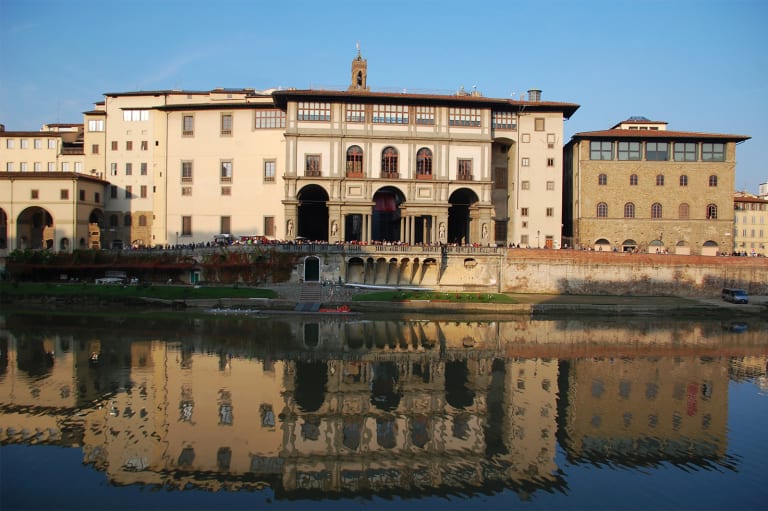
Since you're going to be in Rome for a few days and after discovering all its secret corners, why not visit one of the most beautiful cities in Italy on a day trip or go to one of the most famous ruins in the world?
I am, of course, talking about taking a trip to the city of Florence, with its incredible cathedral, and on the way stopping off at Pisa to see its famous leaning tower, or exploring the ruins of Pompeii, which preserve one of the most faithful images of life in the ancient world. Choose your own adventure!
Discover Florence and Pisa

This excursion not only takes you to see the most unforgettable sites in Florence, but also passes through Pisa to see the iconic leaning tower that has made the city so famous.
A local guide, an expert in the history of both cities, will take you to see everything you can't miss: Florence's Piazza del Duomo, Palazzo Strozzi, Ponte Vecchio, and the Galleria dell'Accademia, where you can see Michelangelo's famous David (if you select this option when booking the experience), among other places.
The full-day excursion to Florence and Pisa from Rome lasts approximately 14 hours and costs AED 668. It's a perfect way to include a getaway in your trip to Rome, as you won't have to organise anything. Simply meet your guide at the meeting point and start enjoying yourself. If you want to plan this excursion on your own or consider other options for visiting Florence, I recommend reading this article, where I tell you everything you need to know: Day Trips to Florence from Rome
Visit Pompeii
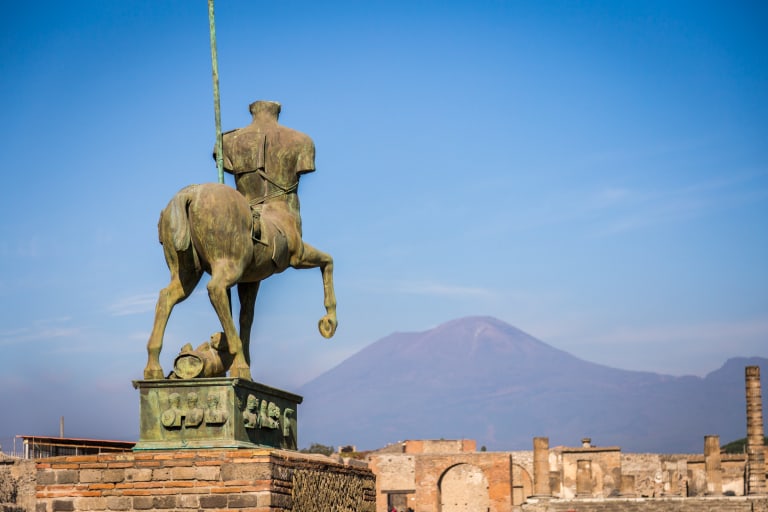
Another option for an excursion from Rome is to book a trip to Pompeii and discover the history of this place and what happened there almost two thousand years ago.
On this day trip to Pompeii and Vesuvius from Rome, you will climb Vesuvius, an active volcano, and enjoy breathtaking views from its crater. Afterwards, you will be taken to a Neapolitan pizza restaurant for lunch, and in the afternoon you will tour the ruins of Pompeii and all its archaeological sites.
To discover other excursions to Pompeii or to find out in detail what you cannot miss once you are there, I recommend reading this comprehensive guide to this experience: 5 Best Day Trips to Pompeii from Rome.
Day five: discover Rome's hidden gems and bid farewell to the city in style
End your trip by visiting some corners of Rome that you might not have time to see on a shorter getaway. That doesn't make them any less interesting to visit.
Discover Castel Sant'Angelo

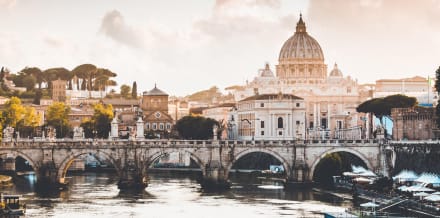
A ten-minute walk from Piazza Navona is Castel Sant'Angelo, on the other side of the Tiber across the beautiful Ponte Sant'Angelo, one of the most beautiful bridges in Rome. It is a majestic building that was built as a mausoleum for Emperor Hadrian, and throughout its history it has served as a fortress for popes and today as a museum for visitors.
It is worth spending the morning visiting this iconic building and climbing to its roof, from which you can see Rome from a different perspective. To avoid queues, you can buy your tickets to Castel Sant'Angelo with an audio guide online, or if you prefer, you can take a tour of Castel Sant'Angelo.
If you decide to visit on your own, I recommend reading this article to find out the most interesting facts about this place in advance: Castel Sant'Angelo in Rome: Tickets and Tours
Stroll along the Appian Way and the Catacombs

The Via Appia is the ancient Roman road that connected the city with southern locations for the transport of troops and goods. It is still quite well preserved today, and along its route you can visit an archaeological park full of interesting sites, the Parco Regionale dell'Appia Antica (one of the most beautiful in Rome).
Strolling along the Appian Way is a great way to enjoy another side of Rome, far from the hustle and bustle of the city centre. I recommend going on a Sunday when it is closed to traffic, as it takes on a very special atmosphere. Start your walk at the visitor centre and make your way to the tomb of Cecilia Metella and the Circus of Maxentius. Along the way, if you feel like it, you can visit the Catacombs of Rome: either those of San Calixto or those of San Sebastián. The Catacombs of San Calixto are the most popular because they offer a longer tour and are the resting place of the first sixteen popes, as well as some Christian martyrs.
If you decide to try this experience, you should know that it can only be done by booking a guided tour of the catacombs and the Via Appia. Read the complete guide to the Catacombs of Rome, where I tell you everything you need to know before booking a tour: Catacombs of Rome Tickets and Tours
Take a break for lunch
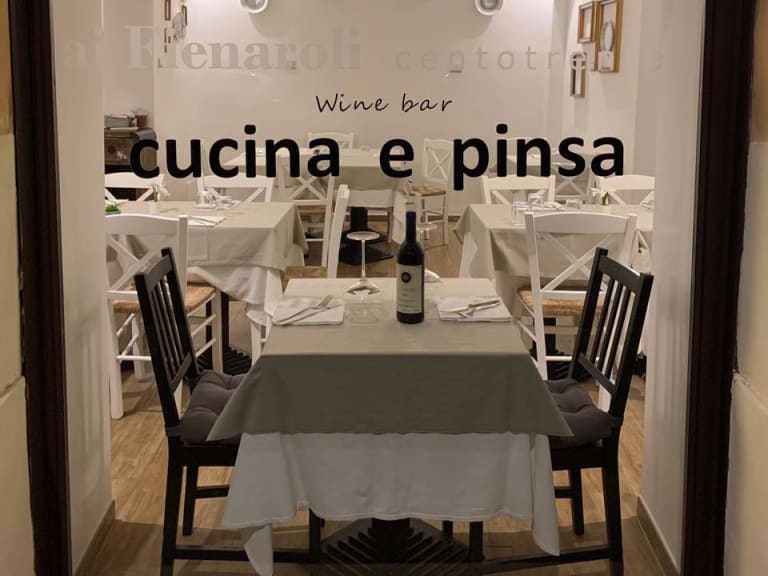
For lunch, I recommend Ai Fienaroli, at Via Piemonte, 125. On the menu, you'll find delicacies such as bluefin tuna tartare with crispy bread and fennel cream, a delicious sea bass carpaccio with pistachios and black truffle, and they also have some wonderful Jewish-style artichokes.
Although the price is around €40 per person, it's worth treating yourself on your last day in the Eternal City.
Look for the lock of the Knights of Malta

At the top of the Aventine Hill, the southernmost hill in Rome, there is an area of lavish mansions and gardens that hides a secret: the Orange Garden, known to locals as the Giardino degli Aranci.
This is a park where you can find a gate through whose keyhole you can see, in the distance, the dome of St. Peter's Basilica, framed by trees. In addition to this curiosity, the area is a delight to stroll through while enjoying the scent of orange trees and, in the evening, admiring the sunset from one of the locals' favourite viewpoints. Consider booking a tour of hidden Rome to discover this and other places off the usual tourist trail.