Best Time to Take a Tour to See the Northern Lights from Reykjavik
The Northern Lights are one of Iceland’s must-see wonders, but when is the best time to see them in action? Read on to find out when to admire them.

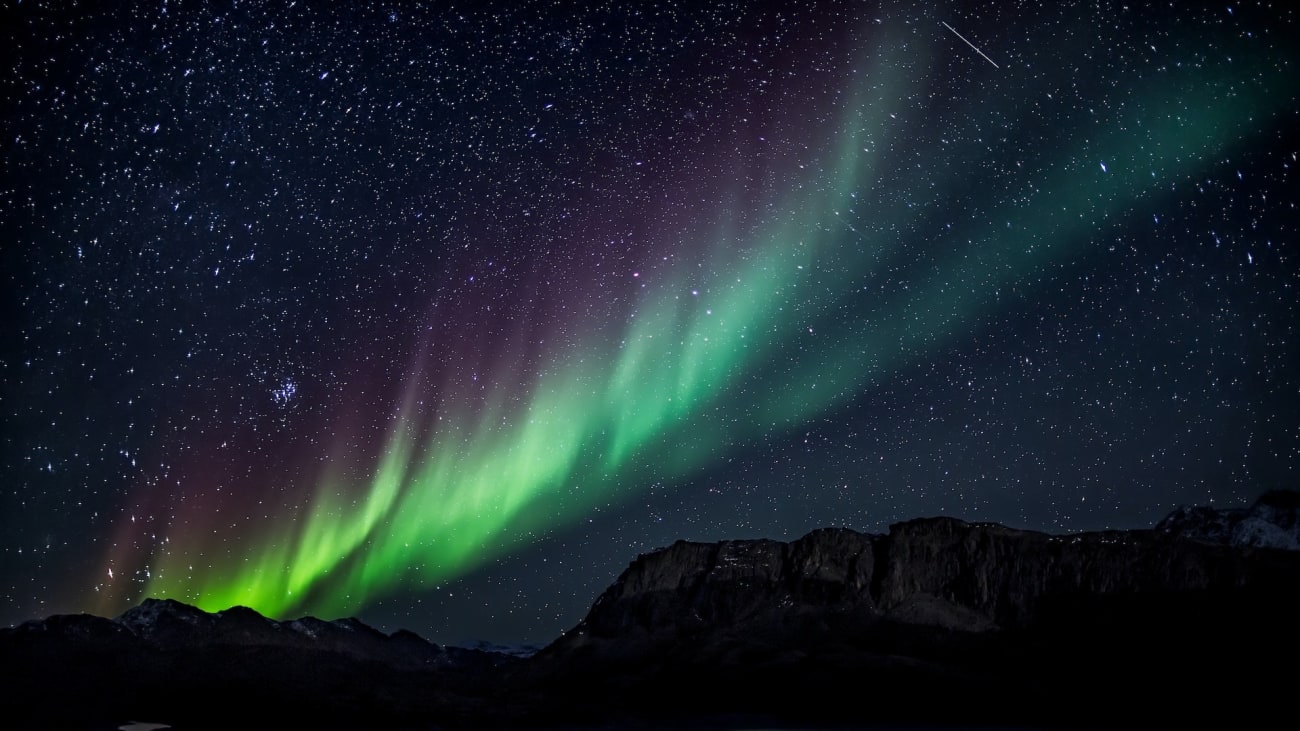
The Northern Lights from Reykjavík | © Visit Greenland
The Northern Lights can be seen from the highest points in Iceland, and there’s a specific time of year when you can watch them dance across the sky. Sometimes these lights are very still, whilst at other times they move frantically.
The best time to see the Northern Lights in Iceland is in winter, so this is an activity you simply must include amongst the things to see and do in Reykjavík at that time of year.
When is the best time to see the Northern Lights?
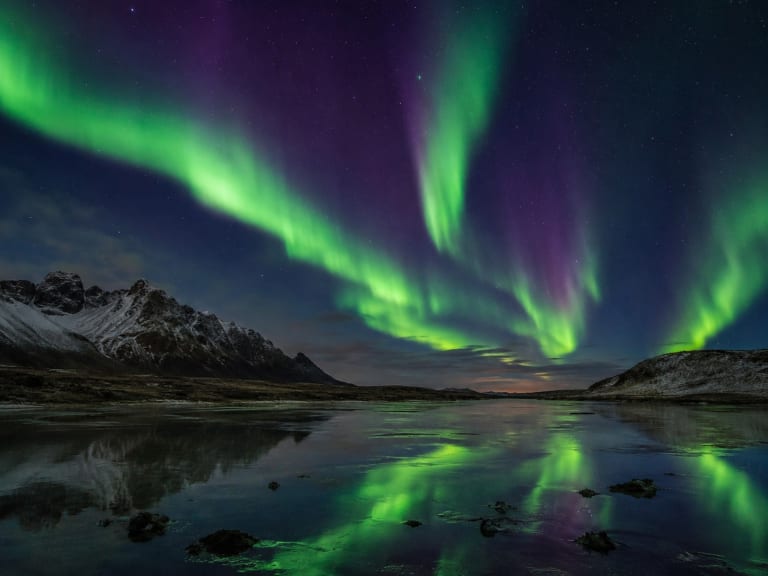
The best time of year to see the Northern Lights in Iceland is definitely the winter season. During this season, the nights are much longer than the days and darkness envelops the entire Icelandic landscape, giving way to the most beautiful light shows in the sky.
In summer, it’s virtually impossible to see this phenomenon, as summer nights are short and often non-existent. The brightness prevents the Northern Lights from appearing during summer nights.
Another essential factor for seeing the Northern Lights in Iceland is the low level of light pollution found in most parts of the country. Particularly in wooded areas and on the summits of the island’s mountains and dormant volcanoes, it is possible to witness this spectacle when the night is dark enough.
As for the weather, to enjoy this spectacle you need to bear in mind the low temperatures during the winter season; you should also be aware that at night, the wind chill can make it feel even colder.
Visiting the Northern Lights in December, January and February

During December, January and February, winter is much more pronounced. Temperatures start to drop further and the nights grow increasingly longer, sometimes lasting up to 20 hours.
With nights this long and much darker than in other winter months, the Northern Lights become much more visible and striking. The downside of seeing this phenomenon at these times is that the weather can be a little harsher compared to other months of the year.
But the truth is that the Northern Lights can be seen throughout the winter months, even during the final months of winter, when temperatures begin to rise and summer starts to arrive in Reykjavík.
December, in particular, is when winter in Reykjavík is felt most strongly, with daytime temperatures reaching around zero degrees and night-time temperatures dropping to -3 degrees. Given this, it’s important to check the Icelandic Meteorological Office’s website to see if the weather will be suitable for viewing the Northern Lights.
It’s also common during the harsh winter for strong winds and storms to make it impossible to go out in search of the Northern Lights; to find out whether your Northern Lights excursions will coincide with storms or not, I also recommend checking the weather conditions in advance.
Although January and February are also part of winter, temperatures during these months can be slightly higher than in December and there is a little more daylight, but they are still good times to go in search of the Northern Lights, particularly as the storms ease off a little.
Visiting the Northern Lights in September
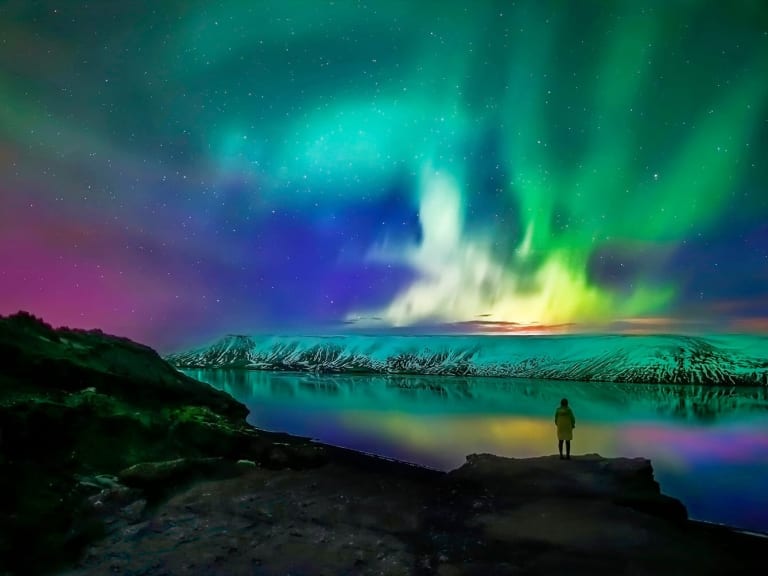
September, meanwhile, is one of the best times to visit Reykjavík and also to see the Northern Lights. It’s a month when the weather is usually a bit warmer as winter is only just approaching, so it’s an ideal time to catch the first Northern Lights of the winter in less harsh conditions.
Furthermore, in September the low season is only just beginning to set in, so one of the best things about this time of year is that the number of tourists drops slightly, leaving you free to secure the best places to stay and the best experiences for seeing the Northern Lights.
This month, which falls halfway between summer and winter, also gives you the chance to explore routes that will be closed during the winter, so it’s a great time to visit Iceland and explore the whole island – without, of course, missing out on seeing the Northern Lights.
As for the prices of excursions and tours to see the Northern Lights this month, you should know that you can get good deals as the peak season is drawing to a close. It may even be much easier to book a private tour at an affordable price.
Viewing the Northern Lights on clear nights

If there’s one rule for seeing the Northern Lights clearly, it’s that you need a dark and completely clear night. The clearer the night, the easier it will be to witness this dancing spectacle in the sky.
The best spots for viewing the Northern Lights are on the peaks of the island’s highest mountains; however, these locations may vary depending on the weather forecast.
December is generally the month that offers the most dark, storm-free nights, which is why it is one of the months with the highest probability of seeing the spectacle in the skies. In certain forests in Iceland, it is also possible to see the Northern Lights, provided the night is dark enough.
As autumn approaches in September, you can find nights dark enough to see the Northern Lights, and the experience can be considerably better because the weather is more pleasant compared to other months of the year.
In October and November, the nights are usually clear, although the weather starts to become much harsher as winter approaches. Gusts of wind tend to become much more frequent, but storms have not yet set in, which is ideal if you want to go on an excursion to see this polar phenomenon.
Best time to visit the Northern Lights if you want to save money
Firstly, you should know that winter is the low season in Iceland, so everything is cheaper during these months. What’s more, the number of tourists tends to drop considerably, making Iceland a great destination for seeing the Northern Lights.
However, you also need to bear in mind various factors when booking a tour to see the phenomenon. There are plenty of private tours that can take you to see the Northern Lights; however, if you’re looking to save money, you should opt for more comprehensive packages.
Tours that offer a fully equipped coach and transfer from your hotel to the Northern Lights viewing site are a good option if you want to save money and only have time to go and see the light show.
Another great option that I really recommend is a combined tour. This means you can enjoy two activities in a single package. Generally, viewing this fascinating phenomenon is combined with other activities such as whale-watching tours from Reykjavík or the much-loved Golden Circle tours.
You can also book a combined Northern Lights and ice cave tour from Reykjavík, which is another of the quintessential winter activities. One thing you should know about these combined tours is that you have the option of booking a private tour just for your group and still save money, thanks to the package deal.
If you’re travelling to Iceland with your family and want to know what to see and do in Reykjavík with children whilst also saving money, I recommend asking, before making your booking, what the minimum age is to take part in the experience and whether they offer discounts for children. This could help you save a significant amount of money, as it means the children can come along and you’ll pay less for their tickets.
Best time to visit the Northern Lights if you want to see them with fewer people

You can find countless Northern Lights tours departing from Reykjavík, and most of these are shared with other people who also want to witness the light show. And I’m sorry to say that, as winter is the ideal season for spotting the Northern Lights, these tours tend to be very busy.
If you want to have a great experience watching the Northern Lights – and, above all, to do so with your family or a group of friends – then I recommend booking a private tour to see this light show.
Generally, on this type of excursion or getaway from Reykjavík, you’ll be travelling with just your group and will be accompanied by an expert who’ll tell you everything you need and want to know about the Northern Lights. They’ll also take you to the locations where the highest level of aurora activity is forecast for that night.
Another advantage of this type of tour is that it’s usually carried out in a minivan , where you’ll have all the necessary comforts for a peaceful and comfortable journey.
This is one of the best experiences you can have if you want to see the Northern Lights with just a small group of people.
Best time to visit the Northern Lights if you want to photograph them
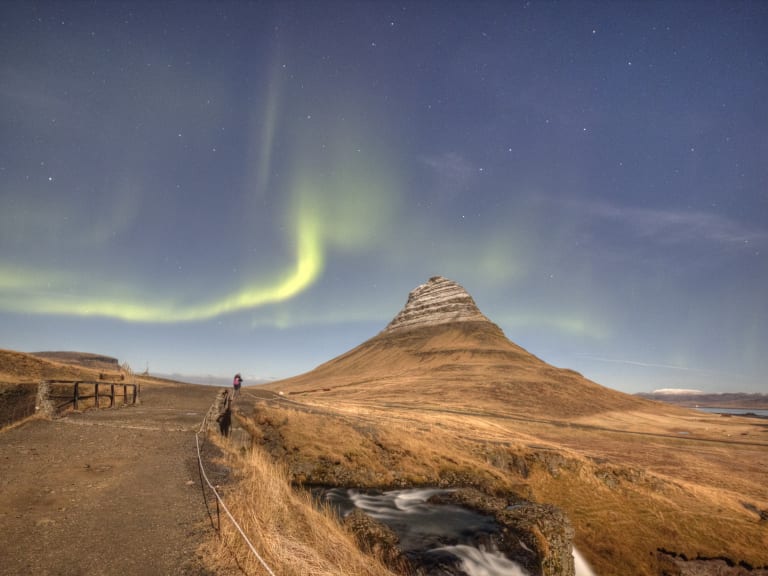
Of course, one of the first things we think about when planning a trip to see the Northern Lights is how best to capture them in a photograph. And I have to tell you that to take the perfect photograph of the Northern Lights, several factors need to come together.
One of these factors is timing, and in this case you’ll know that one of the best times to see the Northern Lights is during December, when the nights are longest. You also need to take into account the amount of light in the location where you’ll be taking the photograph; the fewer lights present in the scene, the more the Northern Lights will stand out.
Once you’re sure you’ve met the first two requirements, you need to get your camera settings right. To take a good photograph of the Northern Lights , you should use manual mode and adjust the settings according to the movement and brightness of the aurora.
If you’re new to photography and only have your mobile phone’s camera, try researching the camera modes your phone offers beforehand so you can take some great photos you’ll be proud of later.
Best time to see the Northern Lights and save time

If you’re visiting Iceland but are short on time and definitely don’t want to leave without seeing the Northern Lights, I have to tell you that to be sure you’ll be able to enjoy this spectacle, you’ll need to set aside two nights for it.
On most of these tours, you’re allowed to take part in the experience again the following day if no Northern Lights are sighted during the excursion. But in this case, it’s again very helpful to book a combined experience, which allows you to do two activities on the same day.
Another way to save time on this sort of trip is by booking private tours; this way, the experience is just for your group and you, so you set the pace.
When it comes to the best time and the highest chance of spotting this phenomenon, it’s essential that your guide is as knowledgeable as possible on the subject, so they can search for the Northern Lights in the right places every night.
This is another way to save time: going on this sort of expedition with an expert guide. If you go off on your own to hunt for the Northern Lights, you’ll probably have little luck and waste time.